R. Colin Blenis

I study how nurses learn to recognize and care for people: how education and institutional culture shape clinical practice, and how memory and narrative shape our understanding of one another.

Selected Scholarship

Nursing education, memory & ethics

Blenis, R. C. (). Interruption, Not Transmission: Denaturalizing Punitive Culture in Nursing Education. Advances in Nursing Science. Advance online publication.
Examines how punitive culture is passed on in nursing education and how educators can interrupt that pattern.
View publication →
Blenis, R. C. (). Therapeutic Communication as Autobiographical Memory Scaffolding: Bridging Developmental Science and Psychiatric Nursing Practice. Journal of the American Psychiatric Nurses Association. Advance online publication.
Connects therapeutic communication with how people organize memories of their lives, with implications for culturally responsive assessment and care.
View publication →
Blenis, R. C. (). The Functional Requirements of Person-Centred Fundamental Care: Evaluating Artificial Intelligence and Robotics Against a Depleted Baseline. Journal of Advanced Nursing. Advance online publication.
Proposes questions for evaluating AI and robotics against patients’ care needs, including when existing care is already inadequate.
View publication →
Blenis, R. C. (). Knowing Pain Without Certainty: Recognition When Self-Report Is Unavailable. Nursing Philosophy, 27(4), Article e70125.
Examines how nurses can recognize pain when a person cannot provide a self-report, keeping the responsibility to care in view when certainty is limited.
View publication →
Teaching

I teach clinical judgment as something students develop through explanation, practice, feedback, and revision. My aim is a classroom where students can ask questions, make their reasoning visible, and learn from uncertainty.

Case discussions connect assessment findings to decisions about care. Students practice explaining what they notice, considering what else they need to know, and revising their reasoning as new information becomes available.

At Chamberlain University, I serve as course lead for Psychiatric & Mental Health Nursing and teach in Adult Health and the Health Assessment lab. My earlier teaching at Cornell spanned psychology, human development, and leadership.

Selected Writing

Essays, poetry & fiction

“Incantations”

Winner of the 2026 Indiana Review Creative Nonfiction Prize

Selected by Ross Gay Forthcoming in Indiana Review

Essays

“The Body Knows First” · American Journal of Nursing · Vol. 126.5, May 2026 Read →

Poetry

“Mechanism of Action” · JAMA · April 2026 Read →

Fiction

About

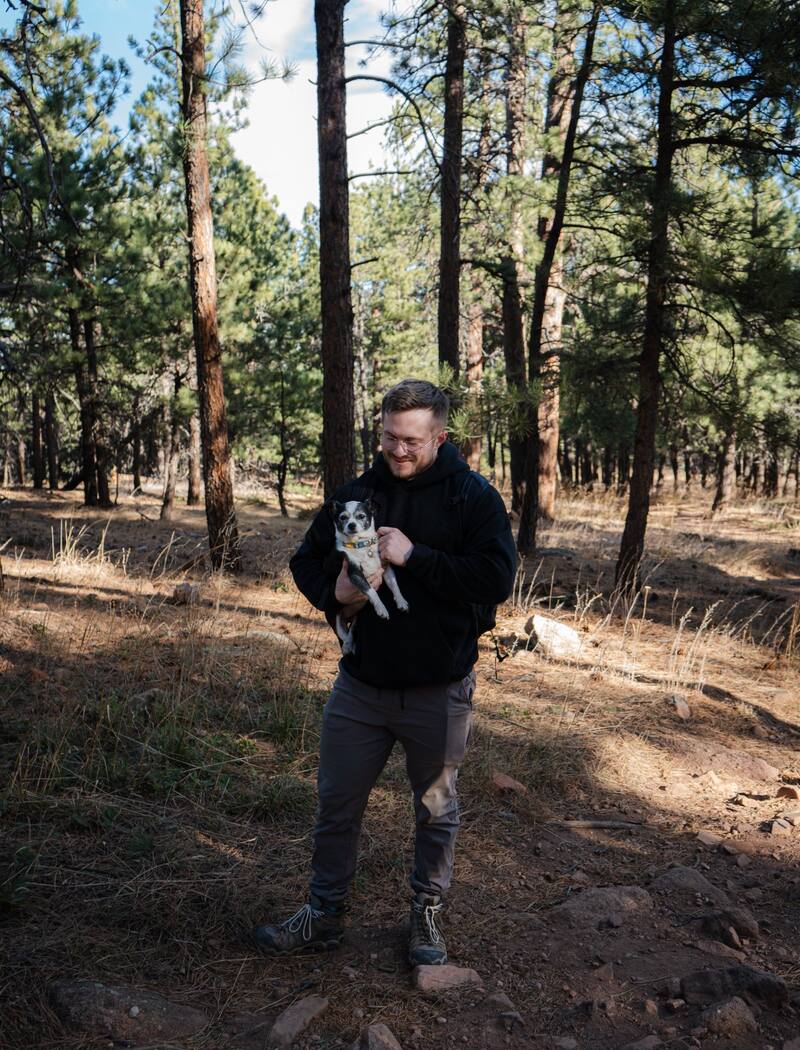
R.C. Blenis in a pine forest, holding a small dog

I am an assistant professor of nursing at Chamberlain University and a writer based in Atlanta. My scholarship brings nursing into conversation with psychology, ethics, and the health humanities.

I studied psychology at Georgia Tech and developmental psychology at Cornell, where my research focused on autobiographical memory. I earned my nursing degree at Emory and a master’s in nursing education at Western Governors University.

My clinical background includes emergency nursing, intensive care in Brooklyn during the first wave of COVID-19, and psychiatric nursing leadership. These experiences continue to shape my questions about the responsibilities of clinicians, educators, and institutions.

My essays, poetry, and fiction explore care, suffering, memory, and the stories people tell about their lives. Across scholarship and creative writing, I return to what it means to attend closely to another person, including when an answer or a remedy is uncertain.

I live with my wife and two dogs in Atlanta. My longstanding Buddhist practice also shapes my attention to language and everyday life.

Correspondence

For research and teaching collaborations, speaking or reading invitations, and editorial inquiries, please contact me.

colinblenis@gmail.com
For editors & event organizers

R. Colin Blenis is an assistant professor of nursing at Chamberlain University and a writer based in Atlanta. His scholarship explores nursing education, ethics, memory, and the health humanities. His clinical background spans emergency nursing, intensive care, and psychiatric nursing leadership. His essays, poetry, and fiction explore care and the stories people tell about their lives. His writing has appeared in JAMA, the American Journal of Nursing, and the Massachusetts Review.